



















































Answering the Call of the Ocean: Dawson Holtman's Journey to Lifeguard Status
This demanding test represents more than a simple hiring filter. It reflects the life-or-death urgency that lifeguard services face daily.

A Lifeguards Trial by Sand and Sea
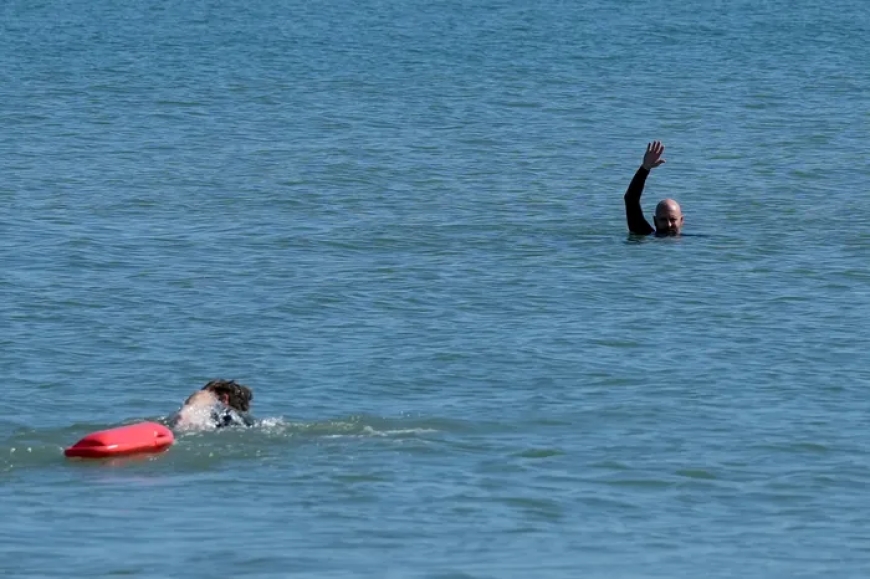
On January 28, 2025, under the golden light of a winter Florida sun, Dawson Holtman sprinted barefoot across the firm sand of Pepper Park Beach. The 22-year-old candidate was not just testing his stamina; he was fighting to earn a badge of responsibility. As part of the rigorous St. Lucie County Ocean Rescue physical exam, Holtman was tasked with running three-quarters of a mile on the beach and then rescuing a fellow lifeguard from the ocean all in under 15 minutes.
This demanding test represents more than a simple hiring filter. It reflects the life-or-death urgency that lifeguard services face daily. Each step Holtman took echoed a deeper truth: lifeguards are not just beach sentinels; they are first responders to natures most unpredictable force the ocean.
Credit: Original coverage by EU TCPalm
The Physical and Mental Challenge
The physical test isn't merely about strength. It challenges a candidates cardiovascular endurance, swimming proficiency, andperhaps most importantlytheir calmness under pressure. Dawson Holtman was put through a lifelike simulation involving the rescue of lifeguard Matt Kral, who served as the mock victim during the test.
Dragging a fully grown adult out of the ocean after a beach sprint, all within a strict time window, simulates the chaos and urgency lifeguards face during actual emergencies. The ocean is indifferent to effort, and thats the point of this gauntlet. Ocean Rescue doesnt just seek strong individuals they need the unshakable.
Guardians of 300 Yards of Coastline
St. Lucie County Ocean Rescue oversees four guarded beaches, including Pepper Park and Waveband Beach. Together, these amount to about 300 yards of protected coastline. While the number may seem small, the responsibility is vast. These are some of the most visited beaches on Floridas Treasure Coast, welcoming both seasoned swimmers and unaware tourists.
Even within this limited area, rip currents, sudden weather changes, jellyfish swarms, and panicked swimmers all demand swift and decisive action from lifeguards. Having professionals like Holtman trained and ready is not a luxury it's essential public safety infrastructure.
Mentorship on the Shoreline
As Holtman rested between tasks, Lt. Morgan Harmon, a seasoned member of the Ocean Rescue team, offered guidance. With years of experience, Harmon isnt just an evaluator shes a mentor. Her presence ensured the test wasnt just a pass/fail gauntlet but a learning moment for a young candidate on the cusp of a challenging but noble career.
The relationship between lifeguard veterans and recruits is vital. Experience passes down through demonstrations, shared stories, and critiques. Through this mentorship, rookies like Holtman gain more than physical skill they inherit a legacy of vigilance, discipline, and service.
The Psychological Toll of Rescue Work
While much focus is placed on the physical demands of lifeguarding, the mental challenges are equally significant. Lifeguards must be prepared to make life-and-death decisions in seconds. They must read changing tide conditions, assess panicked swimmers safety, and act without hesitation.
Holtmans test simulated a single rescue but in reality, lifeguards often perform multiple interventions a day, under intense sun and mental fatigue. Burnout and trauma are real hazards. Recognizing this, St. Lucie County places emphasis on ongoing training and psychological support for its rescue staff.
Why Lifeguard Tests Still Matter in the Era of Technology
In an age of drones, surveillance cameras, and automated alert systems, you might wonder: why not let machines do the watching? The answer is simple no algorithm can replace human instinct, empathy, and real-time decision-making.
Lifeguard assessments like Holtman's remind us that while technology supports safety, it cannot replace the intuition of a trained professional scanning the surf with a practiced eye. A human can notice subtle cues: a limp arm, unusual posture, or the silent distress of a swimmer slipping under things that machines might overlook.
From Candidate to Community Hero
Should Holtman succeed and early indications suggest he did he wont just be patrolling a beach. Hell become part of a proud tradition of service that binds together the Ocean Rescue community and the broader public. Lifeguards like him become symbols of summer safety, remembered by parents whose children were pulled from rip currents, and respected by locals who trust their watchful eyes.
Its easy to overlook lifeguards until you need one. But as this test proves, becoming one is anything but easy.
The Future of Ocean Rescue in St. Lucie County
With climate change contributing to stronger and more erratic weather patterns, lifeguards face evolving threats. Rising sea levels and intensifying storms are already reshaping beach terrain and ocean behavior. New recruits like Holtman must not only master todays risks but be prepared to adapt to tomorrows unknowns.
St. Lucie County is responding by expanding training modules, collaborating with environmental scientists, and advocating for higher public safety funding. The physical tests remain the foundation, but the future of Ocean Rescue is multidisciplinary integrating oceanography, crisis psychology, and even AI-assisted surveillance.
Final Thoughts: Why We Should Celebrate Stories Like Holtmans
Stories like Dawson Holtman's remind us of the unsung individuals who quietly prepare to save lives. He represents more than youthful ambition he symbolizes commitment to others, to public safety, and to the enduring relationship between humans and the sea.
So the next time you enjoy a day at the beach, take a moment to recognize the red-shirted figure on the tower. They're not just watching theyre ready.
About the Author
Harlan Elio is a writer and safety advocate passionate about frontline emergency services, ocean ecology, and civic duty. He explores stories of resilience, public service, and the human spirit.