











































How AI and VR Are Redefining the Classroom Experience
Discover how AI and VR are transforming college classrooms with personalized learning, immersive simulations, and real-world skill development.

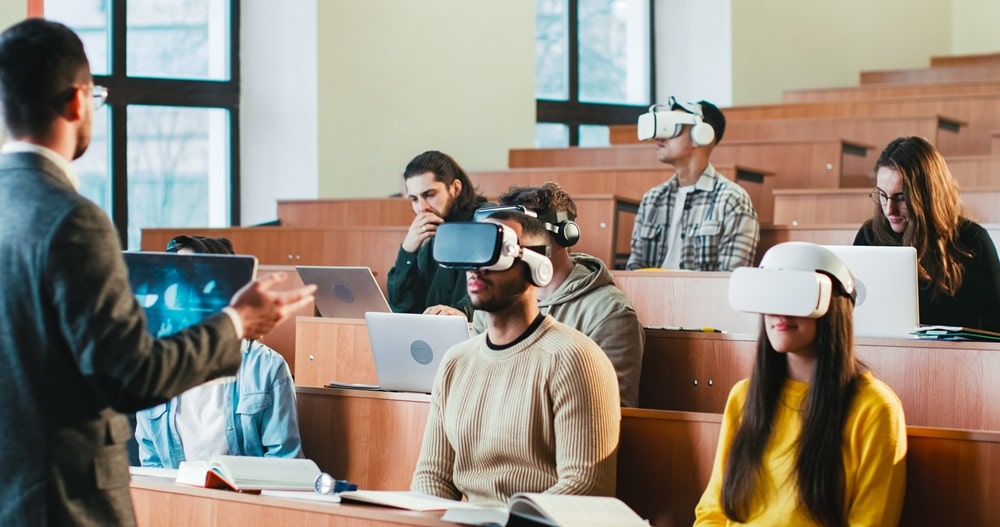
Education is going through one of its most noticeable transitions in decades. As campuses try to catch up with the pace of innovation, many are now moving beyond smartboards and learning apps. Today, the focus has shifted toward immersive tools that mimic real-world experiences and personalize the learning path. Among these, two technologies stand out: Artificial Intelligence (AI) and Virtual Reality (VR).
While often viewed separately, their combined impact is reshaping not just how students learn but also how educators teach. From anatomy labs to engineering simulations, virtual reality medical training is already showing how practical, interactive environments can boost student performance and retention.
Whats Changing in Classrooms?
Lets start with the basics. The typical classroom setuprows of chairs, chalkboards, and passive lectureshas barely changed in a century. But the student body has. Todays learners expect interaction, instant feedback, and real-world relevance.
This is where virtual reality and AI in classrooms are making their mark:
-
AI personalizes content based on performance, learning speed, and areas of interest.
-
VR places students inside simulated environments where they can engage with content physically and emotionally.
Together, they shift the classroom from being content-centered to experience-driven.
The Power of Immersion: Why VR Works
VR does more than entertain. In education, it helps explain complex ideas through:
-
3D visualizations of abstract or microscopic concepts
-
Virtual field trips to historical sites or biological systems
-
Lab simulations for science, medicine, and engineering
A study by PwC found that learners trained in VR completed training 4 times faster than those in a classroom. They were also 275% more confident in applying their skills afterward.
Related post: Virtual Reality's Role in Safer Mining Operations
How AI Enhances Personalized Learning
AI doesn't just grade papers. It tracks learning behavior and recommends content that meets each students needs.
Key applications of AI in education include:
-
Smart tutors: AI chatbots guide students through tough topics.
-
Predictive analytics: Systems detect when a student is falling behind.
-
Automated feedback: Instant grading and corrections save time and encourage faster learning loops.
"AI isn't replacing teachers. It's giving them more room to do what humans do best: mentor, inspire, and connect."
Dr. Karen Willis, Education Technologist
Where the Two Technologies Overlap
This is where things get interesting. Combining AI with VR adds a layer of intelligence to the experience. Instead of a one-size-fits-all simulation, the VR environment adapts based on how a student performs.
For example:
-
In a medical VR simulation, if a student hesitates or misses a step, the AI can pause the scenario and provide tips.
-
In a virtual chemistry lab, AI can highlight safety risks in real-time if the learner performs an incorrect action.
Examples from the Field
-
Stanford University uses VR headsets in psychology courses to help students experience conditions like schizophrenia from a first-person perspective.
-
Arizona State University has integrated AI to automate content recommendation in large online classes.
-
Queens University Belfast uses virtual reality medical training to teach anatomy more effectively than traditional cadaver-based methods.
| Institution | Use Case | Outcome |
|---|---|---|
| Stanford University | VR empathy training | Boosted emotional intelligence scores |
| Arizona State University | AI-based adaptive courseware | Increased student retention by 22% |
| Queens University Belfast | Virtual anatomy via VR | Cut anatomy course failure rate by 30% |
Challenges in Adoption
No change comes without hurdles. The most common challenges include:
-
Hardware costs: High-quality VR headsets and AI systems arent cheap.
-
Faculty training: Teachers need support to integrate tech into their teaching style.
-
Bandwidth limitations: Many institutions still struggle with infrastructure.
But the long-term benefits often outweigh these issues. Many universities have reported improved student satisfaction, higher test scores, and reduced drop-out rates after adopting immersive tech.
Getting Started with AI and VR in Your Classroom
If your institution is considering these technologies, heres a basic roadmap:
-
Pilot a single course: Choose a subject that benefits from visualization.
-
Train the faculty: Offer support, workshops, and peer collaboration.
-
Measure outcomes: Collect feedback, performance data, and compare results.
-
Scale gradually: Expand based on outcomes and available budget.
Final Thoughts
Virtual reality and AI in classrooms are not about replacing traditional teaching. Theyre about strengthening it. By making lessons more interactive, adaptive, and grounded in real-world practice, these technologies offer a path to better learning outcomes.
Education isnt just about what students remember. Its about how well they can apply it. And in 2025, with the help of immersive tools, that application starts right inside the classroom.